11-11-11

Today was like groundhog day. It started for us at 3am Friday morning, that would be 3 pm Michigan time. Every flight was delayed, we went through more security checks than you can imagine,we ate lousy airplane food at strange times and landed safely in Detroit Friday evening at 7 pm Michigan time ( 7 am Saturday Saigon time).

We made some new friends learned a lot of new things and enjoyed every minute of this unique adventure.

20111114-141006.jpg

Halong bay

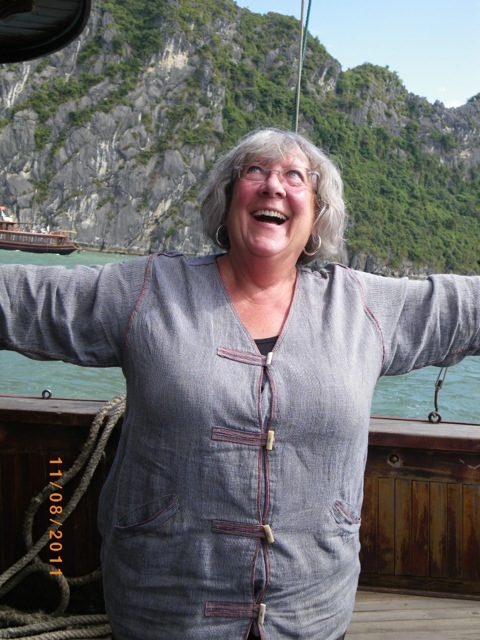
Halong Bay, the last real stop of the trip. The bay is a UNESCO World Heritage site. Ten years ago there were fewer than one hundred boats on on the bay. Now a thousand boats float among the karst outcroppings everyday. Halong means descending dragon. Legend has it that a dragon descended into the bay swinging it’s tail and breaking the rocks into hundreds of small islands. If it is true a picture is worth a thousand words I’ll let the pictures speak for themselves. The boat also stopped at a cave called paradise cave by the tour guide.

On the bus trip to the bay the tour guide reviewed some of the history of Vietnam. The French played a large role in the modern development of the country. They colonized the country and developed large rubber plantations. The architecture, bread and coffee are part of the French legacy but the biggest contribution is the roman alphabet.

20111114-135104.jpg

20111114-135134.jpg

20111114-135152.jpg

20111114-135219.jpg

Hanoi 1

The last day in Saigon was a hurry up and wait day. Hurry and pack, hurry to the lobby wait for the bus, oops the planes be delayed…..We went to lunch at a soup restaurant across from the Hilton where Bill Clinton ate when he visited Vietnam. The traditional noodle soup is served in a large bowl filled with rice noodles and slices of meat or vegetables, it was a good trade for a delayed plane.

We assumed the flight would be in a very small plane like the one we took to Saigon, we were wrong , it was huge. Hanoi is the capital and many people travel there each day. On the ride into town we passed the only thing that has landed Vietnam a spot in the Guinness Book of World records. A three mile ceramic tile tile mural depicting the daily life and history was commissioned for the Millennium celebration. Townies take note, it was created by a local artist, they did not buy it from Germany. We stayed at the Hanoi Hilton, next to the Opera house. The Hilton had bid on the site of the Hanoi Hilton prison but it was sold to a local concern.

After a very quick fish dinner we checked into our rooms for the night.

Tuesday was a very busy day. We started at the ancient Confucius school of literature. This was the first university in Vietnam and it followed Chinese tradition. After three years of training only those who passed the exam in the top one percent graduated. The names of this elite group were engraved on a tablet that rested on the back of a carved turtle, they were awards eight hundred dollars, eight servants and eight horses. They returned to their home province were they were celebrated by all. They became Mandarins, consultants to the emperor. Those who did not pass were allowed another try, when they passed their names were inscribed in smaller letters on the tablet. Students celebrating their graduation today often come to this site as part of their festivities. While the university is no longer active the influence of Confucius on daily life is still profound.

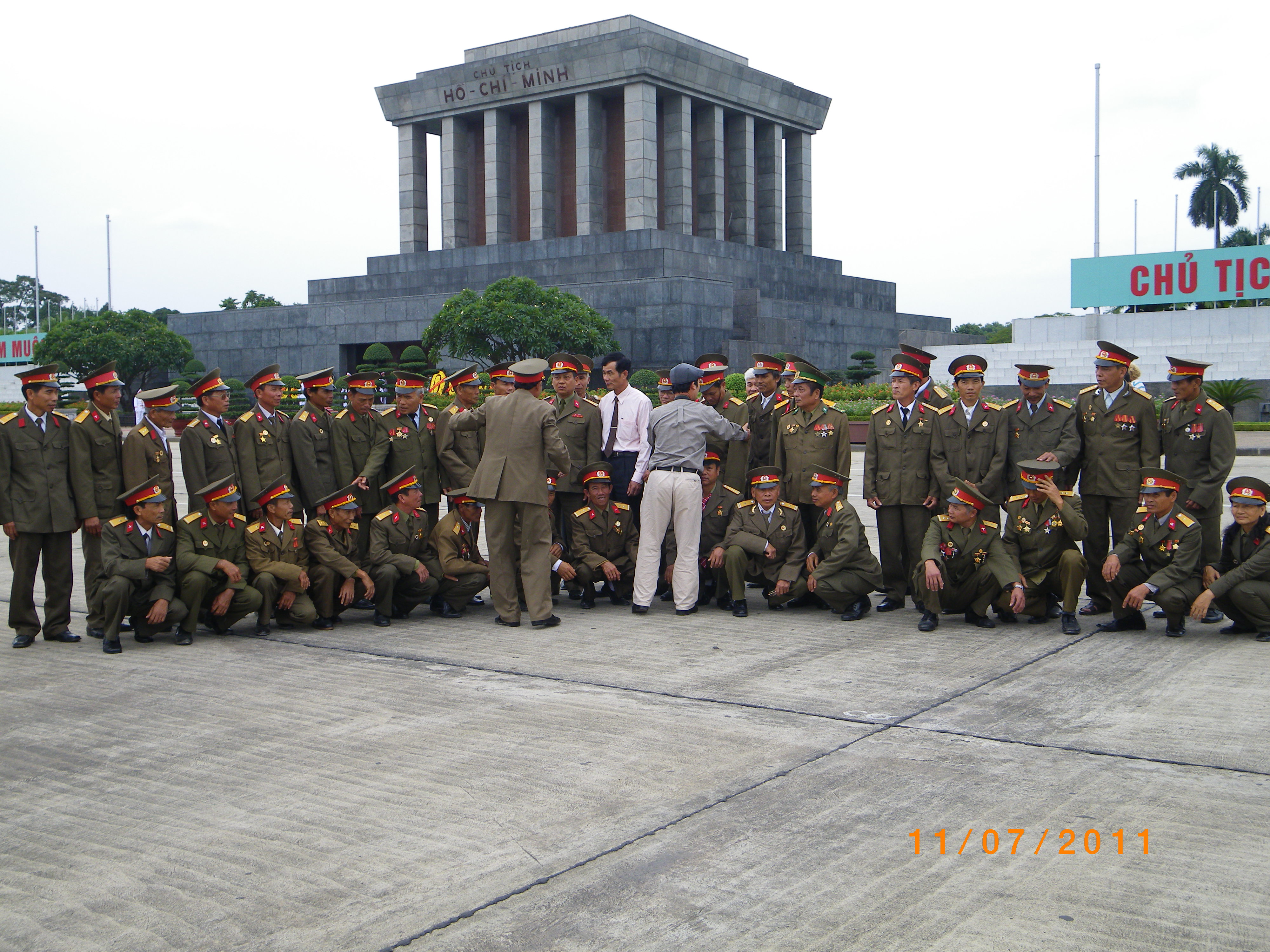
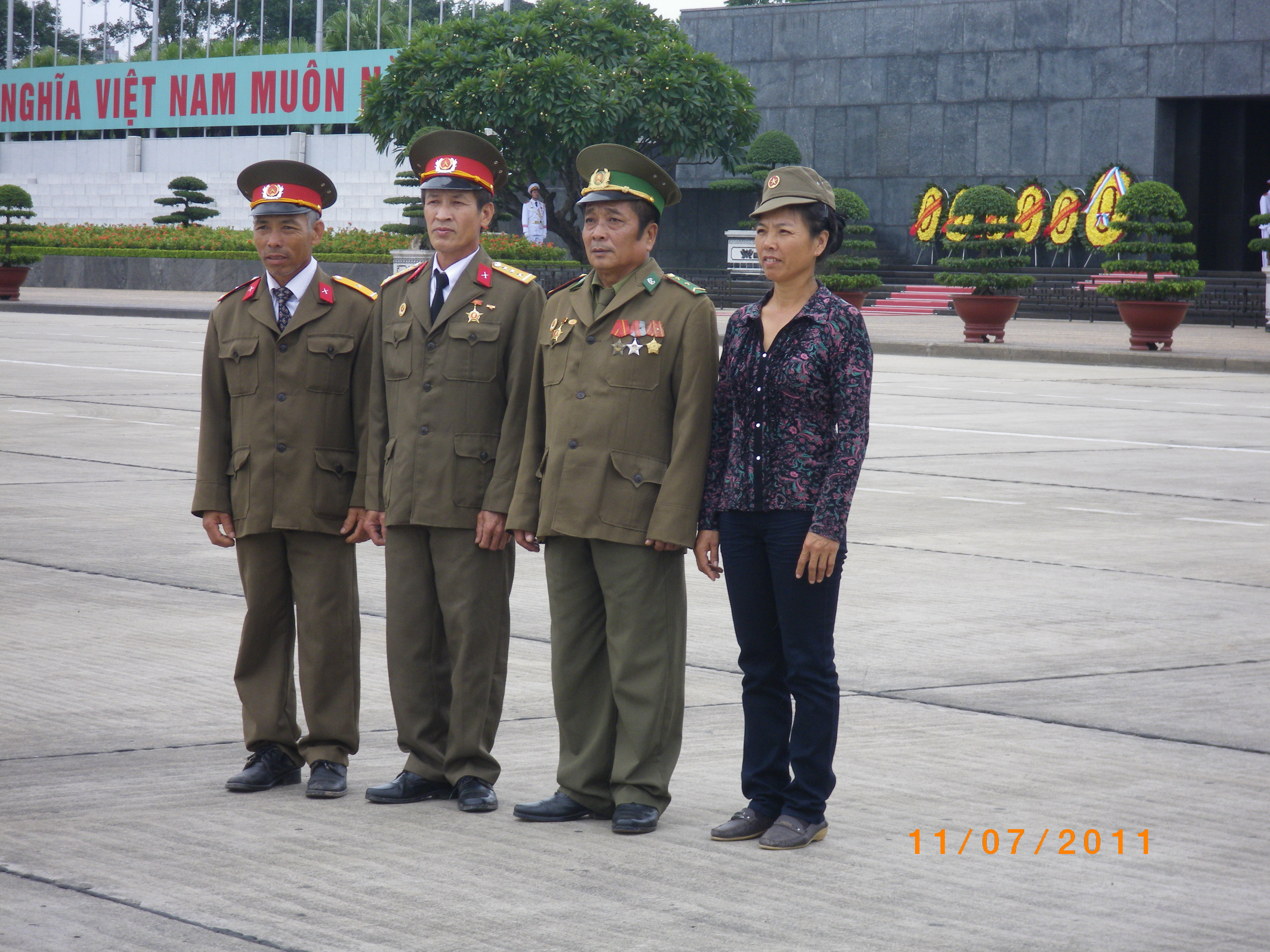
Ho Chi Min’s mausoleum was the next stop. Uncle Ho’s body had been out for additional preservation and cleaning. It was on public display for the first time in several weeks. The area is under strict security and all visitors were expected to behave with the utmost respect as we filed past the body. I was chastised because my hands were behind my back and not at my side. Since he died during the war and his body was hidden in a cave there remain many skeptics about the authenticity of the body.

Reopening of the mausoleum

Reopening of the mausoleum

War friends


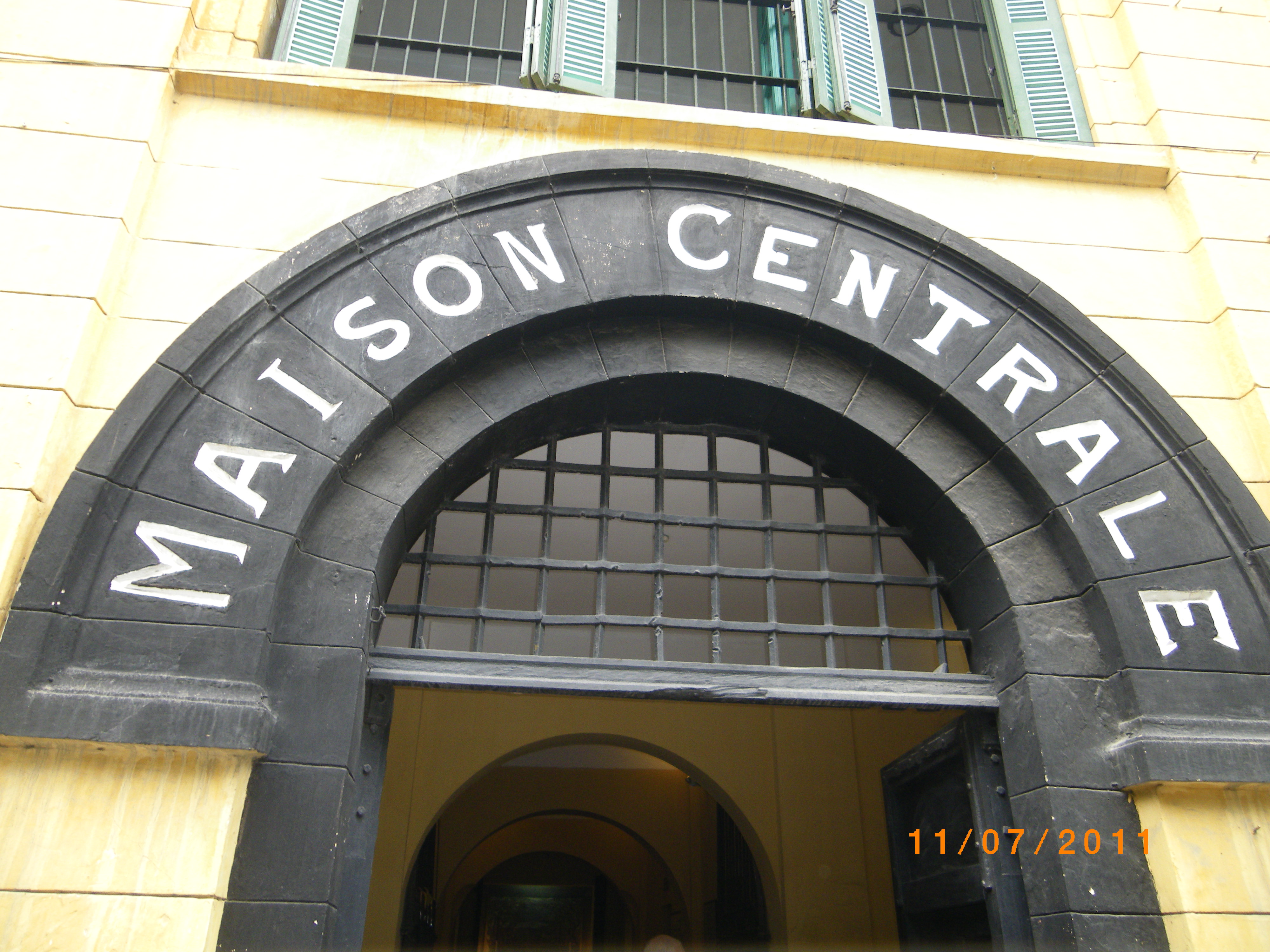
Hanoi Hilton, the Maison Central is the prison of John Macain fame. Prior to it’s use as an prison for the AMERICAN war it was a French prison for the war of independence complete with a guillotine. Only a small portion of the prison remains and little is said about it’s use as a prison for Americans.
[caption id="attachment_555" align="alignright" width="584"]Hanoi Hilton Hanoi Hilton


We boarded the bus for lunch. Vietnam traffic is difficult to imagine, if you stood on the corner of Stadium and Main and all the traffic from all the football games from the season converged on that spot at the same time you might be close to daily traffic in Saigon or Hanoi. The side streets are very narrow, barely wide enough for a bus, so the
bus frequently dropped us at a corner. Today we were dropped on street with open bins of hardware and told to turn right at the yellow motorcycle. The restaurant served us the best meal in Vietnam. Soup, fish spring rolls, eggplant, Calamari, cabbage, pork and a banana dessert. Following lunch we went on an electric car ride around the city. Then we attended a water puppet show. Water puppets were designed by farmers and they told stories about life on the farm, both good and bad. The stage is covered with water and the puppet controls are submerged.

Following the puppet show we shopped until Mary dropped.

Saigon

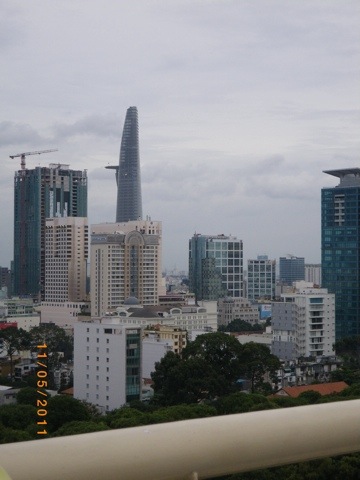
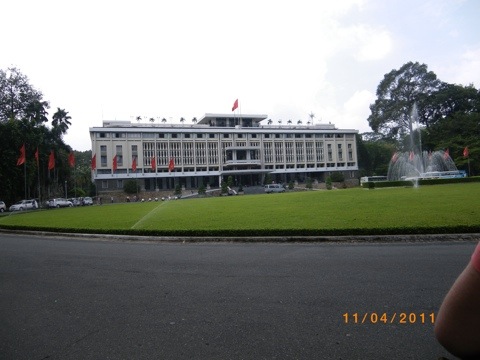
We left the boat in Mytho and took a bus to Ho Chi Min City (Saigon). Our bags were delivered to the hotel and we went to visit The Reunification Palace. The pac ace was the seat of government for South Vietnam. When Saigon fell and the tanks broke down the fence and entered the Palace the president and cabinet were waiting in the conference room to surrender. This building is now a museum and the capitol is in Hanoi. When the Vietnamese people speak of the war they refer to it as the American war. We have been told that in the early 50’s the people of vietnam asked eight times for American assistance and were ignored. When they fought for independence from the French we supported the French with weapons. The American war years later was an effort to stop the spread of communism which would not have been an issue had we responded to earlier requests for help.

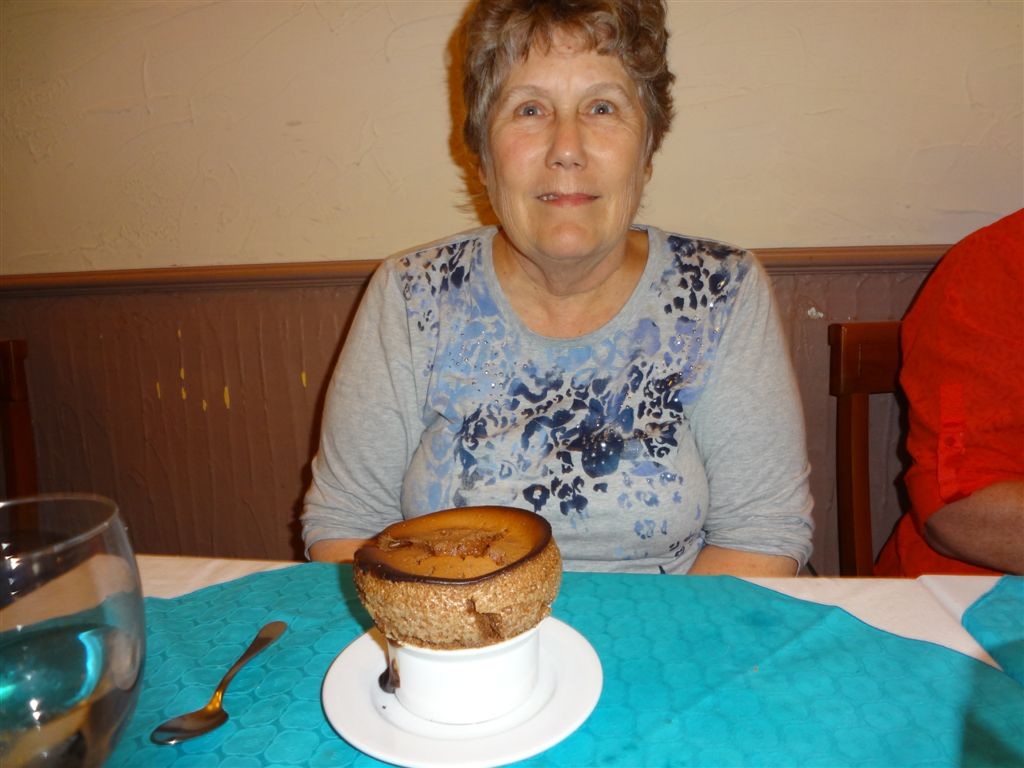
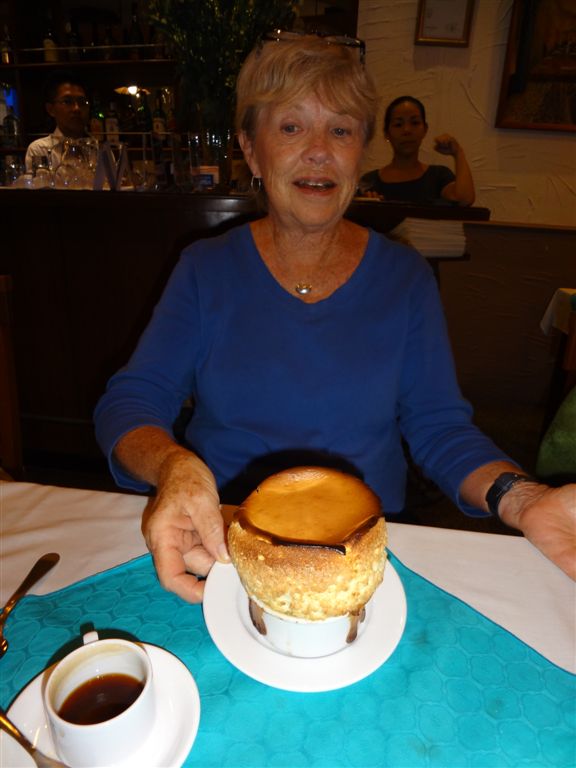
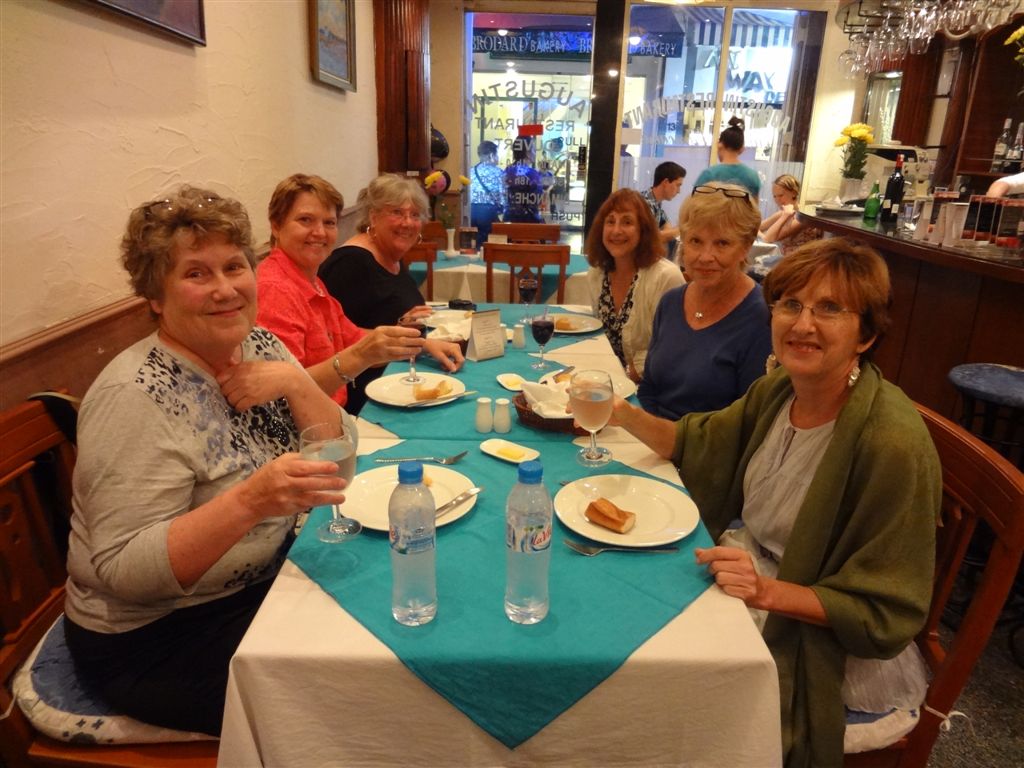
Dinner was on our own. We have made friends with several women who are traveling single and spent the evening with them. We went to a small French restaurant that was owned by a young Vietnamese woman. The food was excellent. English translations can be entertaining. I had salmon and vegetables wrapped in oven, oven is aluminum foil. 2011 Asia SS 1105 to 1110 047

2011 Asia SS 1105 to 1110 046

2011 Asia SS 1105 to 1110 026 We could not get a taxi outside the restaurant so Mary directed us to the Sheraton hotel where she bought enough to earn us the use of the doorman who hailed us a taxi.

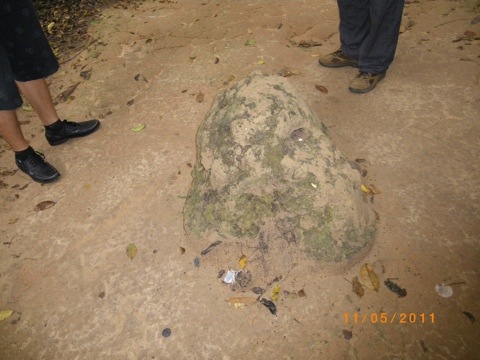
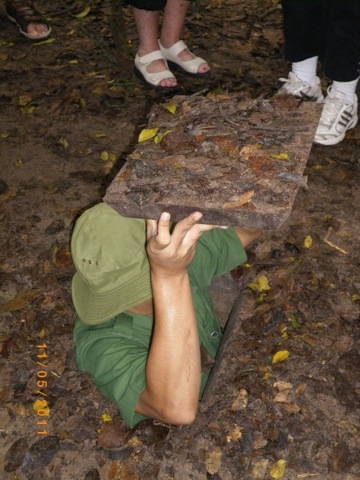
Saturday morning was an optional tour to the Cu Chi Tunnel. The NVA had an extensive tunnel network that aided their efforts in the war. The tunnels began during the war on independence and were extended during the American war. The Americans were aware of the tunnels and unable to penetrate them. The use of dogs was successful until theNVA began using chili powder along the trails. The dogs were soon neutralized by pain and fear. Flooding the tunnels did not work because the NVA built drains that returned the water to the river. Gas was not useful because they were able to seal off parts of the tunnel until the gas was neutralized. Humans were lowered into the tunnel but the death rate for “tunnel rats” was so high that program was discontinued. Agent Orange and extensive bombing had the greatest impact on the tunnels. Vent holes for the tunnels were disguised as termite hills and an extensive filtering system kept the smoke and cooking smells from reaching the surface. Booby traps were brutal, impaling American soldiers on bamboo spikes.

The afternoon trip was to the war museum… I was war weary and attempted to shop with Eileen and Mary. After lunch we grabbed a taxi and headed toward a crafts mall listed in the guide book. The surroundings looked dubious and no mall was in sight so we had the driver turn and around and return us to the hotel. The only thing we achieved was the biggest taxi fare of the trip.

The farewell dinner at the hotel was the worst meal of the trip.

Tonight the majority of the people leave for home, twenty of us are on to Hanoi.

20111107-082247.jpg

20111107-082311.jpg

20111107-082331.jpg

20111107-082358.jpg

Rat Jerky, Neon Jesus and Creamed Purse

We boarded sampans for the morning excursion. A long the way we saw numerous brick factories. The kilns look like large red beehives. The bricks and tiles are all made from the local mud and baked for several weeks. After the baking process the kiln must cool for several weeks before bricks and tiles are removed. The bricks are used locally but the tiles are sold in Europe and asia. The kilns are heated by burning the rice straw. Besides being hard workers the people in this area are resourceful,there is little waste. They seem to use every part of everything.
When the sampan arrived at the town of Sadec, the setting for Margueritte Duras’s novel “THE LOVER”. We visited the home of Huyn Thuy Le the man who inspired the story.

The next stop was the farmers market where the farmers wholesale their goods to the restaurants and local markets. The variety of fruits and vegetables was amazing but nothing compares with the selection of meats. Chickens, ducks, pork, a million kinds of fish, snails, frogs, crabs, snakes and filet of rat were all there to purchase. Today there were no turtles or dogs. Rat filet looks a lot like chicken breast.

We returned to the ship for lunch. The ship moved on to Cai Be towing the two sampans so they were available for the afternoon excursion.

On the sampan ride we saw rat filets drying on the line of one house.
In the afternoon we visited a family candy making business. The made popped rice and Noodles which were covered with a coconut milk combination. The final product was like rice krispy treats. The family also makes coconut candy and fried rice paper, all of which are packaged on site and sold around the country.

The majority of the country is Buddhist, Taoist, Hindu or some combination of the three. A small percentage of the people are practicing Catholics, a throw back to the French colonization. We went. To visit a catholic church, unremarkable architecture but the inside was…..well… Done in neon lights. The altar sports an computerized message banner that posts and a greeting and one can only guess – probably the prayers and hymns roll by during mass. The crucifix is outlined in red neon with a white halo. Outside the Mary grottos are also done in neon but probably are only turned on at night.
On trip home we watched farmers harvest water hyacinth.
One member of our group collects souvenirs in all forms. During dinner she asked Eileen to get a cream pitcher from the waiter station. Eileen followed directions and handed over the cream pitcher. The profanity that ensued was hysterical. The unnamed collector was unaware the pitcher contained cream which spilled on the floor and in her purse as she tried to tuck it away as a souvenir.

Some of us could not stop laughing at the wheel of karma.

2011 Asia SS 1029 to 1104 249

No more tilapia!!!!!

Today we were anchored in Chaudoc. We left on the morning excursion at 8:30 to avoid the heat. We took local river boats to see the Tay An Pagoda and the famous Lady temple at Sam Mountain.

The trip up river was very interesting. The stilt houses made out or corrugated aluminum, the fishing boats, water cress, ” mini- farms” and tons of water hyacinth. The people along the river lost the first crop of rice because of the flooding they will plant a second crop as soon as the river recedes.

The men and women fish with large nets. The fish can be made into eaten fresh,fish paste, or pickled and sold in the market. The pickled fish lasts for several months without refrigeration. Water cress is anchored with Styrofoam and rope so it doesn’t float away. Water hyacinth which we often see in local garden ponds has many uses, food, weaving fiber and a rattan looking material that we use for lawn furniture.

The pagoda was a combination Buddhist, Hindu and Taoist. The pagoda was a tad garish for my taste. Down the street, past the markets, is the Famous Lady Temple.There is a pilgrimage to this temple for three days in March. Visitors offer pieces of gold, roast pig, rice, rice wine and fruit. Prayers are written on paper and burned, the smoke carries the prayer to the Gods. The Famous Lady statue used to ride on the hill but it was brought down for the construction workers to worship during the construction of the canal.

Between the two temples we saw a man drying rice on the street pavement.

On the boat ride back to our ship we stopped at a fish farm. The fish are raised under the house. There are two kinds of fish, catfish ( there are two kinds of farmed catfish, the short whiskers and the long whiskers. They are all shipped to Asia and Europe.) and tilapia.Thousands of pounds are raised under the floor of the floating house. The fish are fed several times a day and it takes six – nine months to reach market weight.
The tilapia
are shipped to the US. We were all grateful that tilapia was not the fish du jour.

Everyday we are seeing barges dredging the river.
I would tell you how there are still many land mines and live bombs left in vietnam, but Mary has told me that Angelie Jolie has already told all of you, and I’m out of the loop.

Tonight we will moor over night in Sadec.

Oat, Oav, Phnom Penh

Monday- oat,oav, oh,another temple, oh, another village. The bad news, the afternoon oav stop Is Flooded so we will spend an extra day in Phnom Penh. In the morning we
Went to another village with more kids, more scarves..

In the afternoon we docked in Phnom Penh. We visited the national museum and took a tour around the city and went to the Russian Market. I am resisting buying souvenirs because I can’t bear to send any more to the recycle center and I have promised myself
That every time something comes in something must go out. Mary snagged opium pipes and coral jewelry.

We returned to the boat and remained anchored in port for the evening. Before dinner we walked. I think this is the first country I have felt it was unsafe to walk. There were fireworks in honor of the kings birthday. He is 90 years old and this is the twentieth anniversary of his second coronation.

In the morning we went to Royal Palace by cyclo. Each member of ship had their own seat pushed by a bike. These poor men cycled all the way to the palace, waited in the street for us to return and then cycled us around town and back to the boat. In the palace we visited the coronation room which houses the throne that is only used for coronations. The hall is used for State visits. The palace is behind the hall but walled off. The silver hall is tiled in large 12 x12 silver tiles… Not ceramic real silver. The hall houses a large collection of Buddhas, silver, gold, marble, baccarat crystal, jade, very small to larger than life.

In the afternoon we went to the killing fields. The genocide led by Pol Pot was brutal. The goal was to eliminate all handicapped, all educated, all creative, and keep only people they could physically and mentally enslave. Children and parents were separated, children were brainwashed to reject their parents and only accept directions from the Khmer Rouge. The torture and methods of execution were barbaric, the regime did not believe the life of these people was worth wasting a bullet to snuff it out. People were beaten against trees, decapitated with the sharp edge of the palm leaf and hung. Based on percents of population this genocide far exceeds the Holocaust. There are several hundred killing fields in Cambodia with numerous mass graves,osiers filled with bones and towers of skulls. The next stop was one of the infamous prisons that had their own unique forms of torture.

In the evening were entertained by young dancers.

Today,which I believe is Wednesday we are sailing all day, no Internet, no stops, only food, more food and drinks that flow like the river. We can see lots of flooded villages.
We will have three programs presented by people on the boat, endangered birds, life in communist Vietnam and making spring rolls.

Early this morning three people left the boat to run. While they were gone the boat left the dock and went to the middle of the river. Watching these people come back to an empty boat slip was really very funny. The tour guide knew they were running and had made arrangements to pull along another ship to retrieve the runners but the runners did not know and stood waving at us from the pier. I’m sorry I have such a sick sense of humor…but believe me there is a back story that makes this even funnier.

Bad karma catches up with me

OMG… Bad karma has hit me the last two days. I accidentally deleted a great day of photos from my camera and the iPad , the iPad crashed while trying to delete all that data. Before the crash my contractor sent an email saying checks I left at home to cover remodeling were bouncing….bad times but all is corrected and back on track.

The pictures lost were from a day of visiting riverside villages. Docking is an ordeal. The community begins to gather on the banks while the crew ties us up and digs or secures to steps for the boarding plank. Once the planks are secure and we????disembark, the children swarm in. “Hello, what is your name, my name is Joe. Look at my mother’s weaving.”. At first they seem very smart but while they hold your hand and walk you thru the village you realize that there is No comprehension the phrases are memorized, they probably know the script in French also. One of the small villages along the river

IMGP0011

After several of us were guilty of slipping some money to the kids the boat guides educated us- one dollar that we give the kids keeps them out of school because five kids begging brings more money to the family than the mom and dad are likely to make that day.

The last village we visited was originally gifted by a Frenchman and then a French NGO. The difference in lifestyle, health and education level is stunning. The water buffalo are fat and sleek, they grow three kinds of rice, the houses are bigger and they have clean water. 140 families live in this cooperative and all the children go to school. There are craft sales but no begging. If I had pictures I would show you a lady carrying rice straw, a herd of water buffalo swimming and the beautiful children.

We also visited an orphanage. At dinner the conversation between Mary and Frank, the ship cynic, centered around the orphanage art work, was it original work of the children or copied by them?

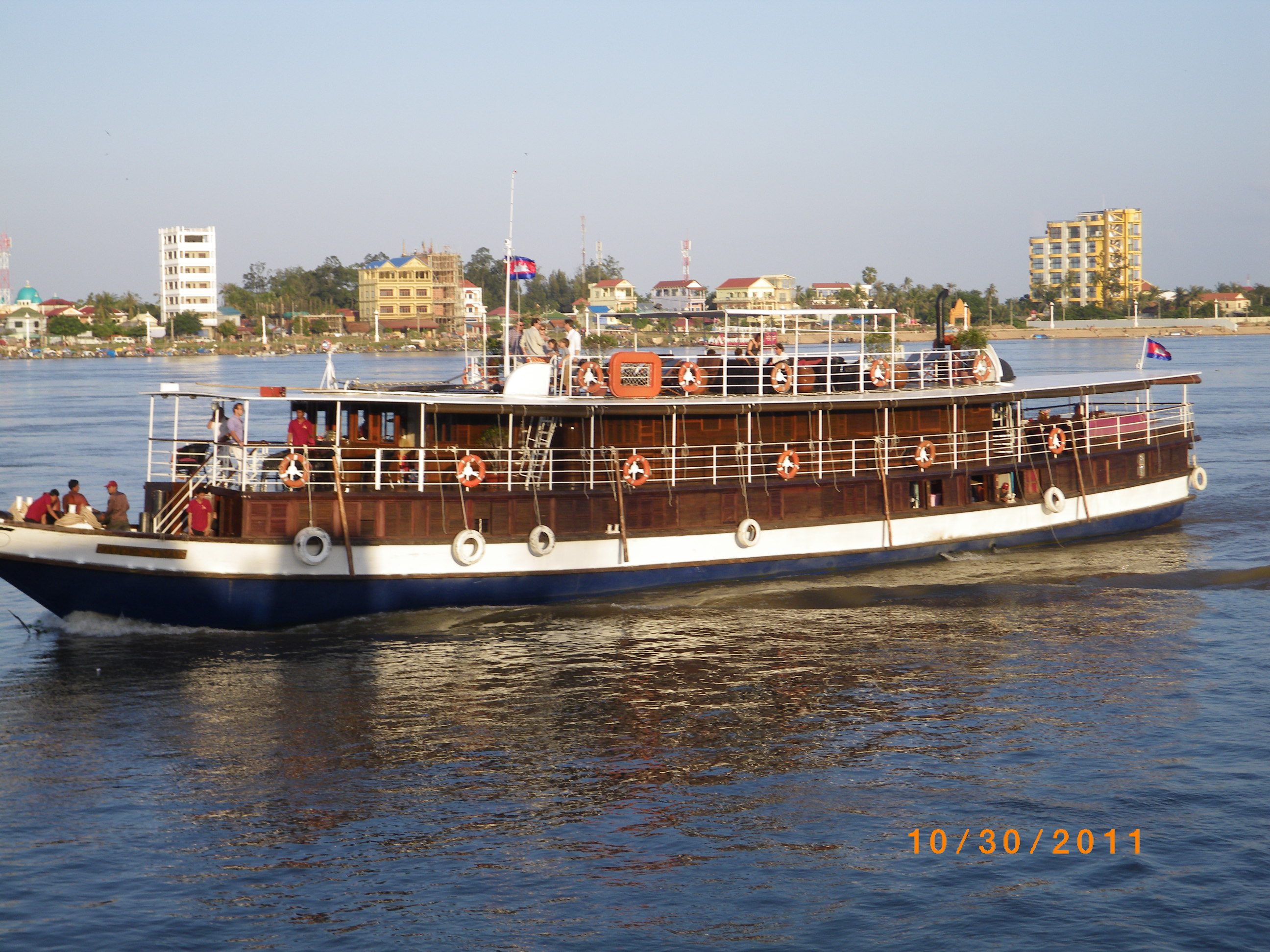
The Boat

The Boat

The Boat

Today we had a five hour bus ride to the boat. The trip began with one unfortunate woman having to stop the bus twice because she was having gastrointestinal problems.

The sights along the road were amazing. The early rice crops are about ready to harvest. Many fields were destroyed by flooding. Another crop is lotus, the flowers are sold at temples, the seeds are a food product and they harvest fish from the rice paddies and the lotus ponds. Houses are built on silts and people live in two rooms during the rainy season. During the dry season people sleep below the house where it is cooler. They burn the rice straw to keep the mosquitoes away at night.

After a potty stop, where we had to walk across a narrow walkway to avoid flooding, our bus air conditioning died. People became very angry and the company had to send us a new bus.

We stopped at a stone cutters market, obviously souvenirs were out of the question.

We arrived at the boat hot and tired. The boat and cabins are lovely if you are not single and assigned to the lower deck. There was one double cabin left so I hooked up with another single woman. The service is fabulous, open honor bar, massage therapy and a gourmet cook who serves three fantastic meals a day. Off the boat the service for the group is also first class. When you leave the bus they give you cold water and when you return they give you more water and a cold compress. The guides are all very knowledgable.

A day of culture

Today was a day to observe the cultural (that they choose to share) and shop.

We began the day at the school of dance. Students who have passed several tests, display potential and are from poor families are admitted for a four year program, a half day of dance and a half day of traditional school. The school was founded by a former dancer who managed to survive the the Khmer Rouge regime. The school is supported by the French government. The students range in age from 8 -12 for the first 3 years. The best stay on longer and the very best are eventually sent to the state university. We observed classrooms and then were entertained by the students.

Eileen was selected from the group as a model to demonstrate the proper way to wear a costume.

Later we went to the silk factory and watched the silk making process from mulberry leaf to finished product. Here they also train the poorer students in the trade. we have had a debate amongst the group about these enterprises or schools that train the poor. My feeling is these kids are very lucky to have a chance to come out of abject poverty. Other members feel like these schools are little more than indentured servitude.

In the evening I went on a cultural event in the country that included an ox cart ride. Mary and Eileen had a massage and shopped.

Susan, we stayed at the Royal Orchid in Bangkok and the Sofitel Siemens Reap. both the hotels are amazing.

Tomorrow we leave for the boat.

This slideshow requires JavaScript.